
Floyd County Probate Jurisdiction
Kentucky District Court handles probate of wills, except contested probate matters that become adversary proceedings in Circuit Court. The research ties this rule to KRS 24A.120, which gives District Court civil and probate jurisdiction over probate except contested adversary proceedings. In Floyd County, the practical probate starting point is District Court at the Floyd County Justice Center, with District phone 606-889-1672 and District Civil phone 606-889-1650 when the clerk directs a civil channel.
Routine Floyd County probate records may involve lodging or probating a will, opening an estate, appointing a fiduciary, filing a bond, recording an inventory, giving creditor notice, reviewing claims, and filing a periodic or final settlement. Guardianship and conservatorship filings can also appear in this broader probate-adjacent records group. If a will contest, title dispute, or other adversary estate issue arises, the matter may belong in Floyd Circuit Court instead of routine District Court probate.
Floyd County Probate Courts
Probate access in Floyd County should start with the court clerk because Kentucky court-record instructions say case-record requests begin with the clerk of the court that heard the case. The same courthouse houses Circuit, Family, District, and District Civil access points, which helps when the searcher is not sure whether an estate matter is routine probate, contested probate, or a related civil dispute. The official Floyd court page also confirms payment options of cash, check, money order, and ePay for eligible court payments, but it does not publish a Floyd probate fee table.
Floyd District Court Probate
Floyd County Justice Center
127 S. Lake Drive
Prestonsburg, KY 41653
District: 606-889-1672
District Civil: 606-889-1650
Floyd Circuit Court
Floyd County Justice Center
127 S. Lake Drive
Prestonsburg, KY 41653
Circuit: 606-889-1658
Use for contested probate, title issues, and appeals when directed.
Floyd Probate Terms
Probate records use terms that are easy to confuse. A will can name one person to carry out the estate, but the court still controls the legal appointment. A person can die without a will, but an estate file may still open to collect assets, give notice to creditors, or transfer property. Guardianship and conservatorship are separate from a decedent's estate because they deal with care or property management for a living person who needs legal protection.
- Testator
- The person who made a will.
- Executor
- The person named in a will to carry out estate duties after court appointment.
- Administrator
- A fiduciary appointed when there is no will or no executor can serve.
- Intestate
- Dying without a valid will.
- Guardianship
- A court process for personal care or decision-making authority for a protected person.
- Conservatorship
- A court process focused on property or financial management for a protected person.
Search Floyd Probate Records
Online probate searching uses the same Kentucky court access path used for other Floyd court records. A user can check Kentucky trial court dockets for hearings and use Kentucky eCourts/CourtNet guest access for broader case-search access when available. Use Floyd as the county filter, choose District for routine probate, and use Circuit if the case is contested or adversary. A decedent name, fiduciary name, case number, or hearing date can help narrow the search.
| Field Label | Type | Required | Options / Format Notes |
|---|---|---|---|
| County | Dropdown | Yes | Select Floyd. |
| Division | Dropdown or radio | Yes | District for routine probate; Circuit if contested. |
| Case number / party name | Text | Optional | Use decedent name, fiduciary name, or case number where available. |
| Date | Date | Varies | Hearing date for docket search, filing range for case search when available. |
- Decide whether the record is routine estate probate or a contested probate dispute.
- Search Floyd District dockets for routine probate hearing dates when a date is known.
- Use eCourts/CourtNet guest access for case-search leads if the file is indexed online.
- Call District Court or District Civil for copy rules, current fees, and older file access.
- Call Circuit Court if the matter is a will contest, title dispute, appeal, or adversary estate case.
Note: The public docket is a lead source, not the official case file, so hearing and copy details should be verified with the Floyd clerk.
Open a Floyd Estate
Opening an estate in Floyd County usually starts by identifying whether there is a will, whether a fiduciary needs to be appointed, and whether a routine District Court probate filing is enough. The clerk can advise which forms, filing fee, bond, fiduciary qualification steps, and settlement timing apply to the file. The research did not locate an official Floyd probate packet, will-safekeeping policy, or inventory deadline handout, so no local form deadline should be stated unless the clerk confirms it.
| Filing or Copy Item | Amount | Source Status |
|---|---|---|
| Probate filing fee | Confirm with clerk | Floyd probate fee table not located. |
| Letters testamentary or administration | Confirm with clerk | Ask District Court or District Civil. |
| Certified copy | Confirm with clerk | Copy fee not captured in research. |
| Guardianship or conservatorship filing | Confirm with clerk | Local packet and fee not located. |
The probate fee gap is important because Kentucky court fees can change, and the research notes statewide civil filing-fee changes effective July 1, 2026. Confirming the amount with the Floyd clerk prevents stale fee information from being used for an estate filing.
Floyd Probate Record Contents
A Floyd County probate record can include the will, petition to probate or open an estate, order admitting the will, order appointing an executor or administrator, fiduciary bond, inventory, creditor notices, claims, accountings, settlements, and closing orders. A guardianship or conservatorship file may include petitions, medical or capacity-related material, orders, accountings, and reports. Not every filing is public in the same way. Protected personal details, medical information, minor information, and sealed material may be restricted.
The probate records pathway remains court-file based. Regional detention systems can appear in the research capture, but they are not probate channels.
This image source is provided because it was captured for this page build, but filing and copy fees must come from the Floyd probate court clerk, not detention-payment systems.
Records Outside Floyd Probate
The Big Sandy, PACER, and TouchPay links on this page are included from the research package only and are not probate channels. A federal bankruptcy case involving a living debtor or bankruptcy estate is searched through federal court systems, not through Floyd District Court probate.
Big Sandy commissary and TouchPay are inmate-service systems, not probate office channels.
The PACER Eastern District of Kentucky Bankruptcy Court page identifies the federal bankruptcy lookup route.
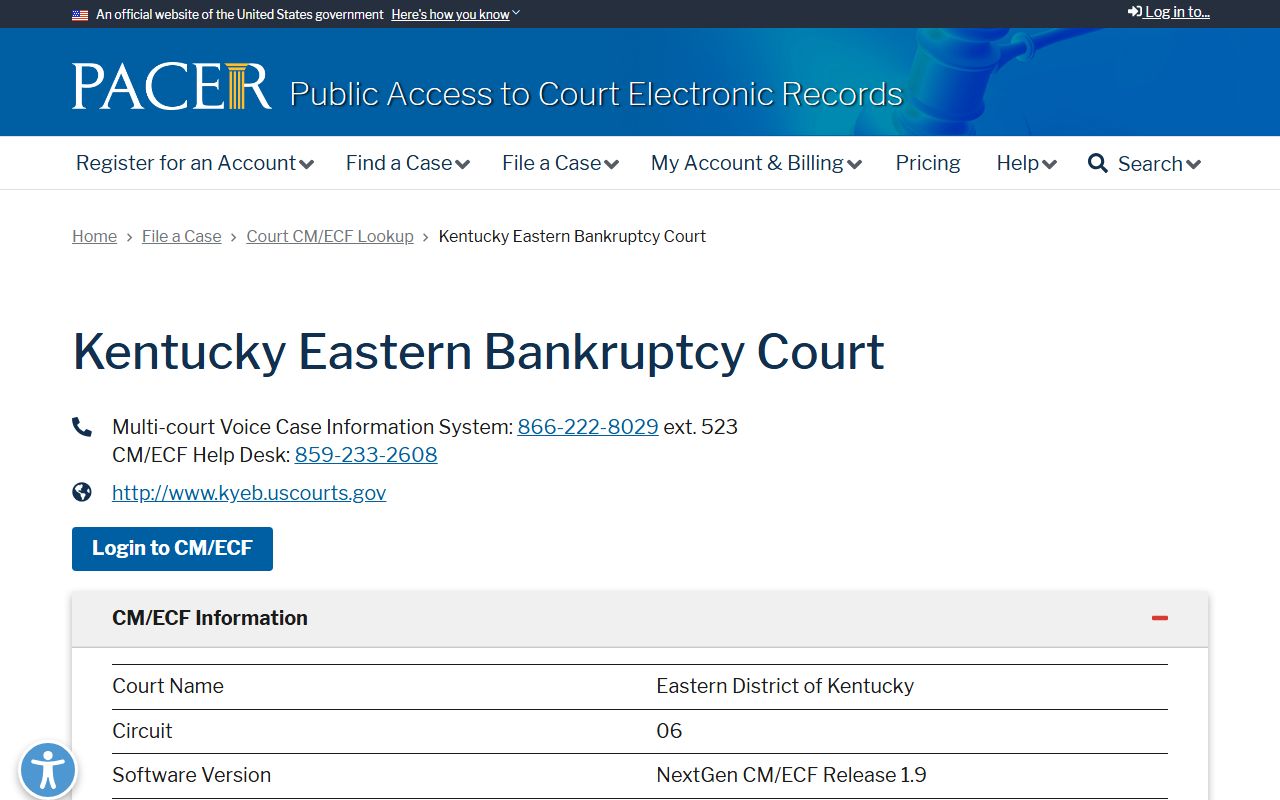
Use PACER for federal bankruptcy, but use Floyd District or Circuit clerk channels for probate estates, wills, and fiduciary filings.
Do not route probate filing or certified-copy questions through detention tools; they do not control probate court records.

That separation helps users avoid sending court filing or copy questions to a service that only handles detention payments.
Restricted Floyd Probate Records
Probate files are often public, but public access is not unlimited. A will, estate petition, fiduciary appointment, inventory, settlement, or order may be available when the file is open to inspection. Medical records, protected identifiers, minor information, sealed exhibits, and certain guardianship or conservatorship materials may be redacted or withheld. The clerk can explain whether a copy is available, whether certification is possible, and whether a court order is needed for restricted material.
Older Floyd probate records may not appear in the public online systems. In that case, the fallback chain is direct clerk contact, in-person file review if allowed, and a written copy request if the clerk accepts it. Administrative open-records requests do not replace court-file access rules for estate cases. The court clerk controls the court file and is the source for record location, availability, and certification.